
You can spot Palm Springs architecture before you know the name for it. A low roofline, deep shade, a wall of glass, and a patio that feels just as important as the living room all tell you that design here is about more than looks. If you love homes with personality and purpose, this guide will help you understand the styles, the climate logic behind them, and what to watch for if you hope to buy or sell in Palm Springs. Let’s dive in.
Why Palm Springs architecture stands out
Palm Springs is not just a place with beautiful houses. The city treats architecture as part of its identity, with planning goals that emphasize neighborhood character, preserved views, and design that fits the desert setting. That helps explain why architecture feels so central to daily life here.
For design lovers, that matters because Palm Springs is not defined by one trend. It is better understood as a response to climate, leisure, and preservation culture. The result is a city where architecture shapes how you live, entertain, and connect to the landscape.
The local design conversation also stays active. The Palm Springs Art Museum highlights modernism and its legacy, and Modernism Week keeps interest high each February and October. Visit Palm Springs describes the city as the world’s largest and most cohesive concentration of Desert Modern architecture.
Palm Springs architectural styles to know
Spanish and Mediterranean revival
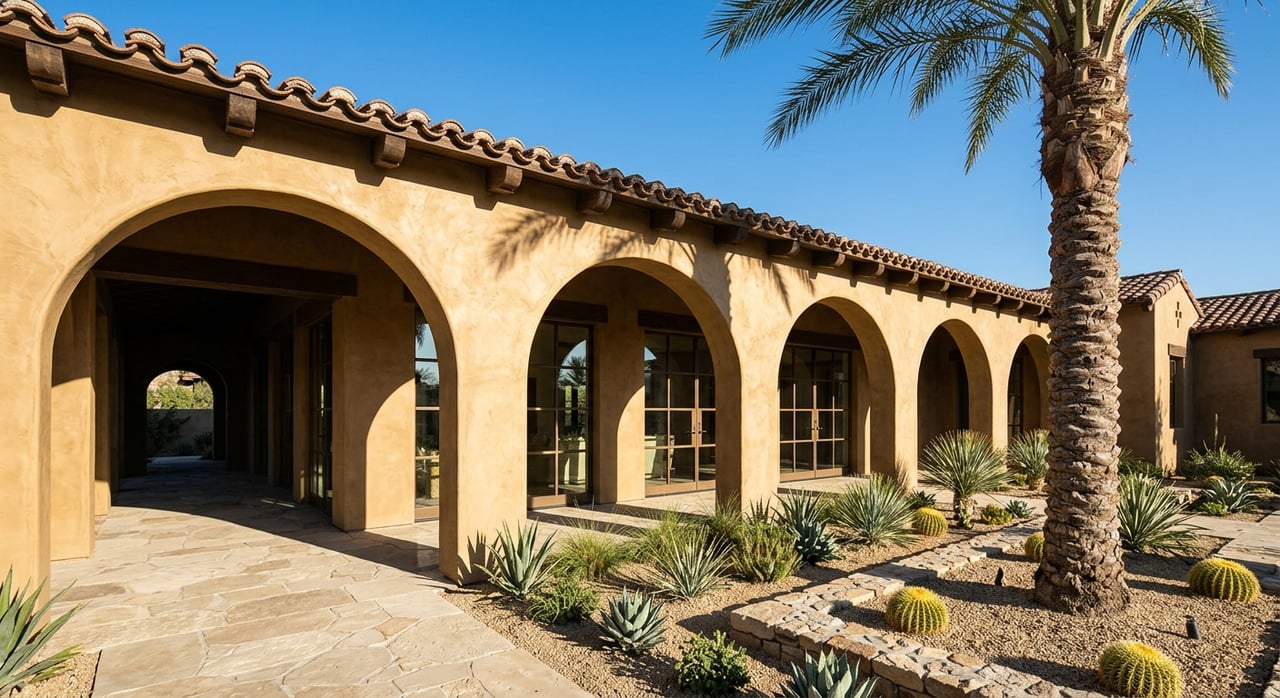
Before Mid-Century Modern became the style most people associate with Palm Springs, earlier homes often reflected simplified Spanish Colonial Revival and Mediterranean Revival influences. These homes were seen as a natural fit for the desert climate and a more casual way of living.
You will often notice cement plaster walls, clay barrel-tile roofs, open eaves, arched openings, and irregular floor plans. Some include towers or wood and steel windows. The overall effect feels warm, grounded, and relaxed rather than formal.
Ranch and hacienda ranch homes
Ranch and hacienda ranch homes are another important part of the city’s architectural story. Palm Springs historic resource records describe adobe, hacienda, and wood ranch vernacular homes as well suited to the local climate and lifestyle.
These homes are usually one story and informal in layout. You may see plaster, brick, or board-and-batten exteriors, low-pitched tile or wood-shake roofs, and minimal ornamentation. They tend to feel quieter than iconic modernist homes, but they still express a strong connection to the desert.
Mid-Century Modern and Desert Modernism
This is the style most people picture when they think of Palm Springs. City planning documents note that Mid-Century Modern architecture suits the desert environment especially well, and the Palm Springs Art Museum says Albert Frey helped establish the regional style known as Desert Modernism.
Look for flat roofs, deep eaves, metal-framed windows, plate glass, sliding glass doors, post-and-beam or steel-and-glass construction, carports, ribbon windows, and strong horizontal lines. These homes often feel crisp and light, but they are also practical. Their design works with the climate rather than against it.
Contemporary desert design
Newer Palm Springs homes often build on Desert Modernism instead of abandoning it. In many cases, contemporary desert architecture keeps the flat roofs, broad glazing, and strong geometry, then updates the materials and detailing.
This approach is visible in places like Desert Palisades, where homes are described as contemporary interpretations shaped by light, climate, and terrain while preserving the spirit of desert modernism. That is part of what makes Palm Springs so appealing to design-minded buyers. You can find homes that feel current without losing their sense of place.
How desert architecture supports daily living
Palm Springs design makes more sense when you understand the weather. NOAA climate normals for Palm Springs Regional Airport show an average annual high of 88.9°F and roughly 114.8 days each year with highs of at least 100°F. In a climate like that, every design move matters.
Deep eaves, broad overhangs, and shaded terraces are not just attractive details. They help reduce direct sun exposure and heat gain. That means a well-designed home can feel more comfortable while preserving the clean, open look that defines the area.
Indoor-outdoor flow is also functional, not just fashionable. Sliding glass doors, patios, pools, courtyards, and breezeways help connect interior space to protected outdoor rooms. In Palm Springs, a terrace or courtyard is often part of the home’s core living experience.
Lower, horizontal forms and thoughtful siting help homes fit the land more naturally. This approach also supports open views of the mountains and desert, which the city values as part of neighborhood character. Privacy often comes from landscaping, placement, and site planning rather than heavy walls or enclosure.
What design lovers should look for
If you are shopping for a Palm Springs home with architectural appeal, it helps to look beyond surface style. A home can photograph beautifully and still miss the deeper qualities that make desert design livable.
Focus on features that support both beauty and function, such as:
- Deep overhangs or shaded outdoor areas
- Strong indoor-outdoor flow through patios, courtyards, or sliding glass doors
- Horizontal lines and siting that respect views
- Materials like stucco, plaster, stone, or metal that suit the desert climate
- Privacy created through layout and landscaping
- Original or thoughtfully updated architectural details
Design-minded buyers also tend to appreciate homes that feel intentional from the street to the backyard. In Palm Springs, the best homes often have a clear relationship between structure, shade, light, and landscape.
Ownership details that matter in Palm Springs
A beautiful Palm Springs home may come with preservation considerations, especially if it is older or located in a historic district. Before buying, selling, altering, demolishing, or adding onto a property, the city says owners should first determine whether it is historic, potentially eligible, or within a designated historic district.
That step matters because alterations, demolition, and new construction on historic sites and in historic districts must be reviewed by the Historic Preservation Officer and or the Historic Site Preservation Board before permits are issued. For buyers, this means due diligence should start early.
Palm Springs also uses a four-class historic classification system. The city notes that any building built in 1978 or earlier, or with an unknown construction date, may fall into Class 4 until confirmed otherwise. That makes permit history, past alterations, and district status especially important to review before you get too far into a transaction.
Why the Mills Act can matter
If you are considering a historic property, the Mills Act may be worth understanding. Palm Springs describes it as California’s leading financial incentive for historic preservation, offering potential property tax relief in exchange for restoration and maintenance standards.
This is not a casual designation. Mills Act contracts run with the land, may involve HOA signers when exterior maintenance is shared, and require periodic inspections and compliance with preservation rules. For the right buyer, it can be valuable, but it should be reviewed with care.
Remodeling with Palm Springs in mind
Palm Springs does not ask new work to copy the past exactly. The city’s general plan says new construction in designated architectural, historical, or cultural districts should complement existing historic structures and open-space characteristics without directly imitating the original style.
That is an important distinction. Good remodels and additions in Palm Springs usually respect scale, views, materials, and site character while still feeling current. If you are buying with plans to renovate, this design philosophy can shape both your vision and your timeline.
Why local guidance matters
For a design-driven purchase or sale, local insight goes beyond pricing and square footage. In Palm Springs, style, preservation status, and setting can all affect value, buyer demand, and the path to closing.
That is where experienced local representation can make a difference. Whether you are searching for a second home with authentic Desert Modern character or preparing a distinctive property for market, it helps to work with someone who understands both the design language and the ownership details that come with it.
Palm Springs architecture has always been about lifestyle as much as aesthetics. Shade, privacy, indoor-outdoor living, and a strong sense of place continue to define what buyers love here today. If you want thoughtful guidance on finding or presenting a home with lasting architectural appeal, Nicole Cox offers the refined local perspective and concierge-style service that desert clients value.
FAQs
What makes Palm Springs architecture different from other desert markets?
- Palm Springs architecture is closely tied to the city’s identity and is shaped by climate, views, preservation, and indoor-outdoor living rather than one single visual style.
What is Desert Modernism in Palm Springs?
- Desert Modernism is a regional form of modern architecture associated with Palm Springs and architects like Albert Frey, often recognized by flat roofs, expansive glass, deep overhangs, and a strong connection to the desert landscape.
What architectural styles can buyers find in Palm Springs?
- Buyers can find Spanish Colonial Revival, Mediterranean Revival, ranch and hacienda ranch homes, Mid-Century Modern, Desert Modernism, and contemporary desert designs that build on those earlier ideas.
What should Palm Springs buyers check before remodeling an older home?
- Buyers should confirm whether the property is historic, potentially eligible for historic status, or located in a designated historic district, because city review may be required before permits are issued.
What is the Mills Act for Palm Springs historic homes?
- The Mills Act is a California historic preservation incentive that may offer property tax relief for qualifying properties in exchange for approved restoration, maintenance, and ongoing compliance standards.
Why do Palm Springs homes emphasize patios, courtyards, and shade?
- The local climate is extremely hot for much of the year, so shaded outdoor rooms, breezeways, and indoor-outdoor connections help reduce heat gain and make homes more comfortable and usable.
