
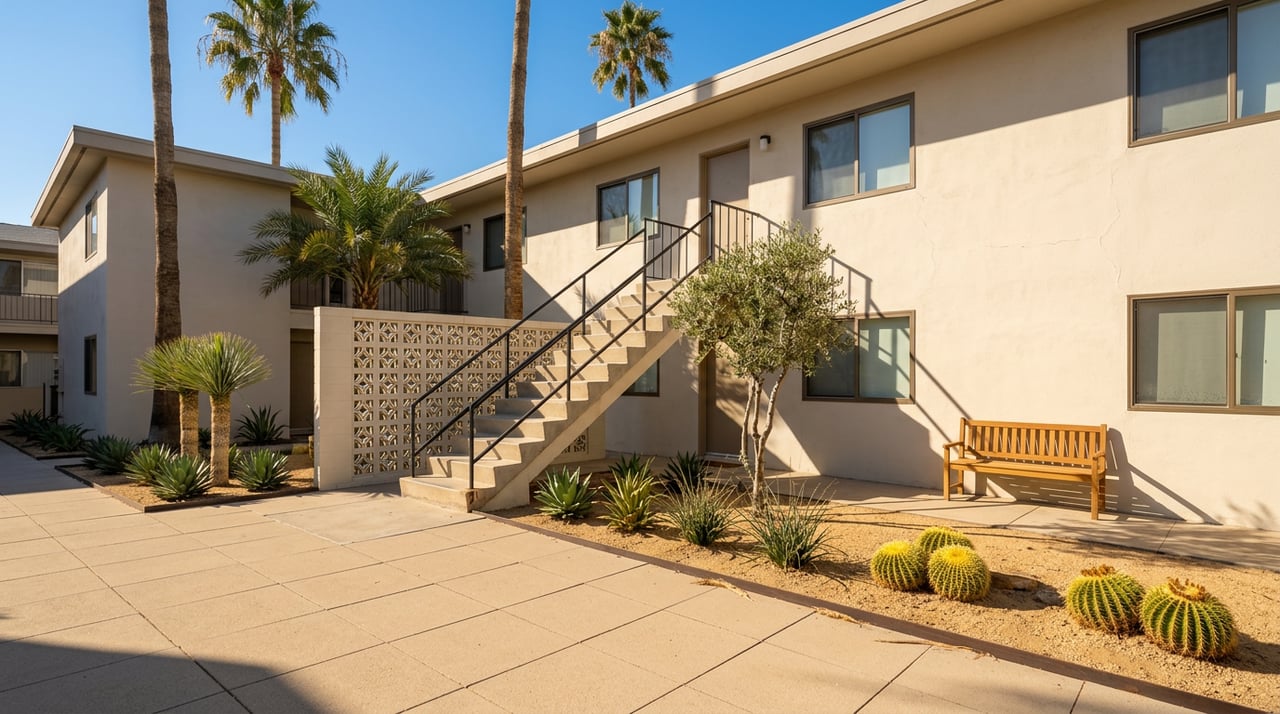
Love the idea of a sun‑soaked desert escape but not sure if a condo or a house fits you best? You are not alone. In Palm Springs, both options offer great lifestyle perks, yet they differ in maintenance, privacy, amenities, and rules. In this guide, you will learn how each choice impacts day‑to‑day living, costs, financing, and potential short‑term rental use so you can choose with confidence. Let’s dive in.
Condo vs house at a glance
Choosing between a condo and a single‑family home comes down to how you plan to use the property, how much maintenance you want, and what kind of privacy and control matter to you.
- Condos typically offer lower day‑to‑day upkeep and resort‑style amenities. Many buyers love the “lock‑and‑leave” lifestyle for second homes. You will have HOA rules and a monthly fee that often covers exterior care and shared spaces. Review what your fee includes and how the building is insured. This HOA fee overview explains what fees commonly cover and why they vary.
- Single‑family homes usually deliver more privacy, a yard or private pool, and full control over design. Expect higher maintenance and utility costs since you are responsible for the entire property.
How you plan to use it
Your intended use shapes everything: loan options, carrying costs, and what rules apply.
- Primary residence: You can consider a wider range of financing, including programs designed for primary homes. Learn how programs differ in this mortgage guide.
- Second home: Conventional loans treat second homes differently than primary residences. Expect different down payment and reserve requirements. Be clear with your lender about your plans.
- Short‑term rental (STR): Palm Springs allows STRs under strict rules, including permits, inspections, booking caps, and monthly tax filings. Read the City’s Vacation Rental program page before assuming rental income.
What daily life looks like
Condos: lock‑and‑leave ease
Condos often include exterior maintenance, landscaping, and shared pools in the monthly HOA fee. That can mean fewer surprises and simpler budgeting. Your HOA’s rules and reserves matter, so ask for the budget, reserve study, meeting minutes, rental rules, and the master insurance policy. In California, HOA operations follow the Davis‑Stirling Act; here’s a plain‑English overview of Davis‑Stirling.
Houses: space and control
With a single‑family home, you own the land and structure, so you set the design direction and timeline. The tradeoff is responsibility for the yard, pool, roof, irrigation, and exterior. The freedom to renovate and personalize is a major draw, especially for buyers who love architecture and outdoor living.
Costs to budget in Palm Springs
Create a simple monthly budget that separates recurring costs from one‑time items.
- Property taxes: California’s Proposition 13 sets a base 1 percent of assessed value, plus local assessments and voter‑approved bonds. Effective rates vary by area. Ask for the prior tax bill and any special assessments. For background, see California’s Proposition 13 framework.
- HOA fees (condos and some gated SFRs): Fees vary with amenities and what is covered. Confirm whether the fee includes common pools, exterior insurance, water, trash, security, or internet. See this HOA fee explainer for typical inclusions.
- Insurance: Condo buyers usually carry an HO‑6 “walls‑in” policy, while SFR owners carry HO‑3 or HO‑5 policies that insure the entire structure and lot. Ask how the HOA’s master policy works and whether separate earthquake or flood coverage is recommended. This guide to home insurance types explains the differences.
- Utilities and services: Plan for summer cooling, internet, trash, and any pool or landscape service if you buy a house.
- STR‑specific taxes and filings: If you rent for short stays, Palm Springs requires Transient Occupancy Tax (typically 11.5 percent for most stays) plus a 1 percent TBID assessment. Owners must file monthly, even with no bookings. Review the City’s TOT and TBID form and rate table.
Financing and insurance differences
Condo financing steps
Condo loans require a look at both you and the project. Lenders review the HOA’s finances, insurance, owner‑occupancy, and any litigation. Ask early if the project is approved and what documentation is needed. See Fannie Mae’s project standards summary for common review items.
Occupancy and loan programs
Be upfront about how you will use the home. Primary, second‑home, and investment loans have different rules on down payment and reserves. A quick read of this mortgage program comparison can help you frame questions for your lender.
Insurance scope and liability
- Condos: Buy an HO‑6 policy for interior finishes, personal property, and liability. Clarify “loss assessment” coverage in case the HOA levies an assessment after a covered loss. Confirm what the master policy insures, and ask about earthquake or flood exclusions.
- Houses: Buy an HO‑3 or HO‑5 policy that covers the entire structure, plus any riders you need for valuable items or special features. If you will operate an STR, verify required liability limits and any local proof of insurance.
Learn the basics in this home insurance types overview.
Desert‑specific factors to consider
Cooling and solar planning
Palm Springs summers are hot, which drives higher cooling loads. Check HVAC age, service history, and efficiency ratings. Many owners explore solar to offset bills, though incentives and net‑metering rules change. Review seasonal conditions using this Palm Springs climate reference.
Water and landscaping
Low‑water landscaping and drip irrigation are common. If you buy a house, ask about irrigation zones, desert‑friendly plantings, and any current water guidelines. In a condo, exterior water and landscaping may be included in your HOA fee.
Pools and spas
Private pools are a signature of Palm Springs living. For houses, budget for weekly service, chemicals, equipment repairs, and optional seasonal heating. In most condo communities, pool care is part of the HOA.
Design and neighborhood fit
Palm Springs is famous for midcentury and desert‑modern design. If you want classic architecture, single‑family neighborhoods like Old Las Palmas, Movie Colony, and Vista Las Palmas feature estate‑style homes and generous lots. If you want walkability to dining and shops, condo communities near Palm Canyon Drive place you close to the action with lower upkeep. Visit areas at different times of day to gauge activity levels and convenience.
Short‑term rental reality check
Palm Springs supports responsible vacation rentals with a detailed program that balances visitor demand and neighborhood quality. Before you buy with rental income in mind, confirm:
- Permit eligibility and requirements
- The neighborhood’s density status
- Contract caps for bookings per year
- Safety inspections and local contacts
- Monthly TOT/TBID filings and deadlines
- HOA permission and any CC&R restrictions
Start with the City’s official Vacation Rental information page for rules, applications, and contact details. For taxes and rates, reference the City’s TOT and TBID table.
Which is right for you?
Use these quick cues to match lifestyle and budget.
- Choose a condo if you want a turnkey, low‑maintenance base with resort amenities and the ability to lock up and go. This is a strong fit for many second‑home owners and retirees who value simplicity and walkability.
- Choose a house if you want privacy, your own yard or pool, and full control over design and outdoor living. This often suits full‑time residents, avid entertainers, or architecture lovers planning custom updates.
- If you plan to pursue STR income, either option can work, but condos may have stricter HOA limits. Verify City permits and HOA rules first.
Buyer checklist: review before you write an offer
Use this list with your agent, lender, and (if applicable) HOA.
- Intended use: primary, second home, STR, or long‑term rental. Program rules vary; review this mortgage comparison to prep lender questions.
- Condo financing: ask your lender if the project is approved and whether a Fannie Mae project review is required. See Fannie Mae project standards.
- HOA due diligence: request budget, most recent reserve study, last 12 months of meeting minutes, master insurance, rental and pet rules, and any pending special assessments. California’s HOA rules start with Davis‑Stirling.
- STR checks: confirm City registration status, neighborhood density, booking caps, and monthly filing duties on the Vacation Rental program page.
- Property taxes: ask for the prior tax bill and any special assessments, and understand Proposition 13 basics.
- Insurance quotes: get HO‑6 for condos or HO‑3/HO‑5 for houses, plus earthquake or flood if needed. Review the insurance type guide.
- Maintenance and utilities: check HVAC age and service, pool and yard needs, and plan for summer cooling. Use this climate snapshot to size expectations.
- Neighborhood fit: weigh privacy and lot size against proximity to dining and events. Walk the area and visit at different hours.
The bottom line
If you want simplicity and shared amenities, a condo delivers an easy, sophisticated base in the heart of the desert. If you crave privacy, outdoor living, and design control, a single‑family home will feel like your own private resort. Both choices can shine in Palm Springs when you match your use, budget, and maintenance style to the right property.
When you are ready to compare live opportunities, review HOA documents, or model carrying costs, connect with Nicole Cox for boutique, concierge guidance tailored to your goals.
FAQs
What are the biggest condo vs house differences in Palm Springs?
- Condos emphasize low‑maintenance living and shared amenities, while houses offer more privacy, outdoor space, and control with higher upkeep.
How do Palm Springs short‑term rental rules affect my purchase?
- STRs require permits, booking caps, inspections, HOA permission if applicable, and monthly TOT/TBID filings that reduce net income; always verify eligibility first.
What insurance do I need for a condo vs a house?
- Condos typically use an HO‑6 “walls‑in” policy alongside the HOA’s master policy; houses use HO‑3 or HO‑5 to insure the full structure and lot.
Do HOA fees replace property taxes in Palm Springs?
- No, HOA fees cover community expenses like exterior care or amenities, while property taxes are separate and based on assessed value and local assessments.
Will summer heat make my energy bills spike?
- Expect higher cooling costs in summer; check HVAC age and efficiency, consider solar options, and review seasonal conditions to budget accurately.
