
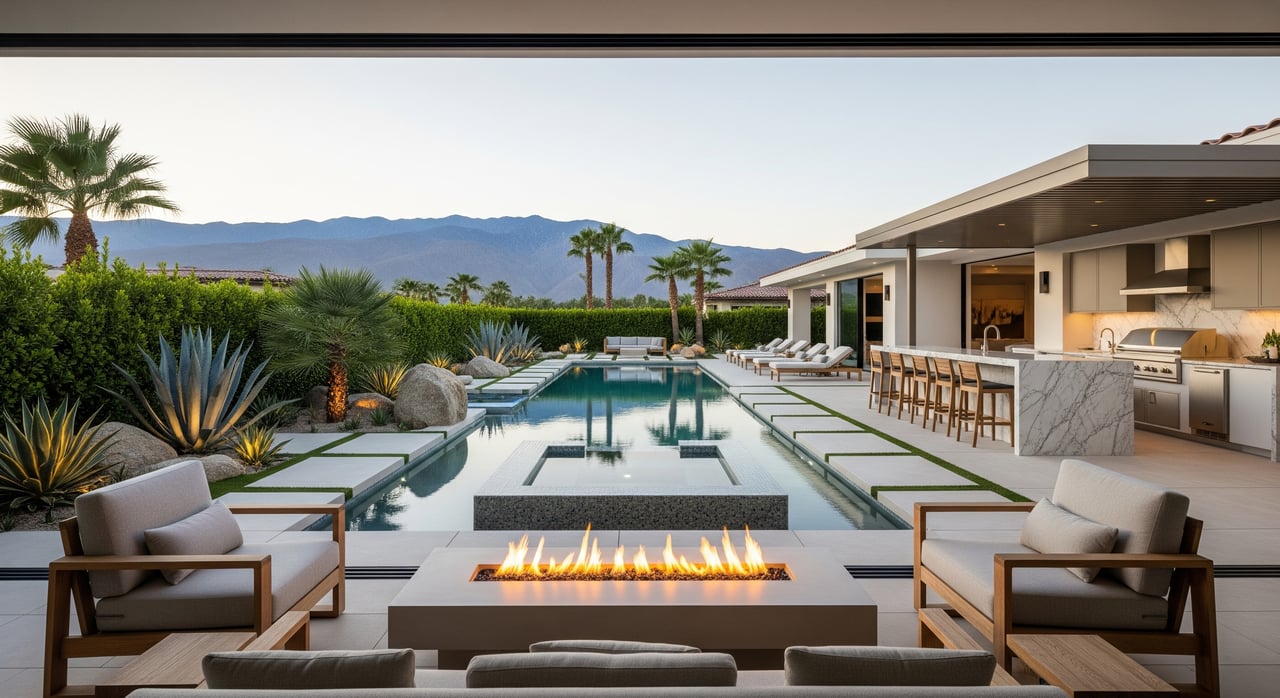
Is your patio sitting empty by midday because the desert sun is too strong to enjoy? In Rancho Mirage, the right outdoor upgrades can turn scorching afternoons into the most comfortable part of your home. Whether you want to improve your own lifestyle or position your property for a premium sale, planning for shade, cooling, and water-wise design pays off. Below, you’ll find the upgrades that work best in our climate, what to consider before you invest, and how to keep long-term costs manageable. Let’s dive in.
Why outdoor living matters in Rancho Mirage
Rancho Mirage sits in the Coachella Valley, where summers are very hot and rainfall is low. Outdoor living is central to daily life and a major part of buyer appeal, especially in mid- to higher-end homes. When you create shaded, comfortable spaces with low-water landscaping and practical hardscape, you extend usable hours and enhance your home’s value.
The smartest strategy is to maximize mornings and evenings while managing midday heat. Combine passive moves like thoughtful orientation, light-colored surfaces, and shade with targeted systems such as misting and efficient irrigation. This balance helps you enjoy your space without driving up water or energy use.
Smart shade strategies
Fixed pergolas and covered patios
Quality shade is the backbone of outdoor living in the desert. Fixed pergolas, ramadas, and solid-roof patios create dependable cover for dining, lounging, and outdoor kitchens. Aluminum and composite systems offer low maintenance and long service life, while engineered or treated wood brings warmth and design character.
Light, reflective finishes reduce heat absorption and make shaded zones more comfortable. For comfort in the hottest months, look for designs that allow air to move freely so heat does not accumulate under the roof.
Retractable covers and shade sails
Retractable awnings and patio covers give you flexibility as the seasons change. Shade sails and cabanas can be a stylish, lower-commitment option to test a layout before you invest in a permanent structure. Trellised structures with drought-tolerant vines add filtered shade and a soft, resort feel without heavy water demand.
Design for sun and breeze
Orientation matters. Size and place your shade so it blocks high summer sun while still allowing winter light where you want it. Slatted or louvered roofs, elevated canopies, and open sides help with ventilation and natural convection. These details can lower perceived temperatures and make afternoons more usable.
Permitting basics
Many fixed shade structures trigger permits and may be subject to height, setback, and foundation rules. Always verify requirements with the City of Rancho Mirage Building & Safety Department and your HOA if applicable. This protects value and avoids costly corrections later.
Misting and evaporative cooling
What works in desert air
Evaporative cooling thrives in our dry climate. Fine-mist systems on patios and pool decks can noticeably drop perceived temperatures and improve comfort during peak heat. Effectiveness declines as humidity rises, but for much of the season, misting is a simple way to extend outdoor time.
Design and maintenance tips
Good layout and nozzle spacing help you avoid damp surfaces and fabric discoloration from mineral residue. In hard-water areas, filtration and periodic nozzle cleaning are essential. Plan for seasonal flushing and routine checks to keep the system running well.
Water use and care
Misting uses potable water, so factor in ongoing consumption and maintenance. Smart timers and conservative run times reduce waste. If you are cooling semi-enclosed spaces, ensure adequate ventilation and maintain equipment to minimize microbiological risks.
Pools with efficiency in mind
Comfort and expectations
Pools are common in higher-end Rancho Mirage homes and often expected. They deliver lifestyle value but bring ongoing water, energy, and service costs. If you own or plan to buy a pool home, weigh both the enjoyment and the operating responsibilities.
Cut evaporation and energy
Pool covers, including solar blankets and liquid covers, significantly reduce evaporation and heat loss. Variable-speed pumps and efficient filtration cut energy use without sacrificing performance. With abundant sunshine, solar pool heating can be a cost-effective way to extend the swim season.
Automated water-level controls and leak detection limit waste. Together, these upgrades help you enjoy the pool while curbing monthly costs.
Safety and compliance
California requires compliant pool safety barriers for most single-family properties, and local rules may add requirements for gates, alarms, and fencing. New pools and remodels require permits and inspections. Confirm specifics with the city, county, and your HOA before work begins.
Know the costs
Pools add recurring expenses for chemicals, cleaning, filtration, and utilities. If you are selling, be transparent about upkeep and highlight efficiency features. If you are buying, ask for recent service records and equipment specifications so you can plan your budget accurately.
Hardscape and microclimate
Cooler surfaces
Choose light-colored, reflective materials for patios and pathways to lower surface temperatures. Permeable pavers and decomposed granite help with infiltration in landscape areas, while textured, slip-resistant surfaces improve safety around the pool. These materials support comfort and durability in long, hot summers.
Functional outdoor rooms
Think in zones. Create distinct areas for dining, grilling, lounging, and sunning, with shade transitions that ease you from one microclimate to another. Thoughtful placement of walls, plantings, and structures can buffer wind and guide cooling breezes through the space.
Drainage that protects
Even in an arid climate, good grading and drainage are essential. Make sure water flows away from the foundation and that hardscape includes proper drains. This reduces maintenance and protects your property during rare but intense rain events.
Low-water landscape design
Xeriscape fundamentals
Xeriscaping focuses on minimizing turf, using mulched beds, and prioritizing native or low-water plants. Group plantings with similar water needs into hydrozones for efficient watering. With the right design, you can achieve a resort-quality look that is also practical in a drought-aware market.
Smart irrigation tech
Drip irrigation for beds and micro-sprays for shrubs reduce evaporation compared to large overhead sprinklers. Smart controllers, soil moisture sensors, and event-based controls help prevent overwatering. Look for EPA WaterSense labeled controllers when you update your system.
Planting with purpose
Select drought-tolerant species adapted to the Coachella Valley. Canopy trees that provide summer shade while using minimal water can cool outdoor rooms and reduce heat load on adjacent walls. Consult regional plant lists and local extension resources to ensure roots, canopy size, and water needs fit your site.
Turf alternatives
If you want a green accent without heavy water use, consider a small synthetic turf area, low-water groundcovers, or gravel and decomposed granite courts. These options provide visual relief and usability with lower maintenance.
Programs to check
Landscape projects may need to meet California’s Model Water Efficient Landscape Ordinance and local water agency rules. Incentives for turf removal, efficient irrigation, and smart controllers are often available. Verify current eligibility and requirements with your water provider before you begin.
Lighting and power planning
LED lighting for ambiance and safety
Low-voltage LED fixtures add evening usability without large energy loads. Layer pathway, step, and accent lighting, and place entertainment zones on separate circuits and timers. This creates a welcoming glow while keeping controls simple.
Outdoor kitchens and appliances
If you add an outdoor kitchen, select efficient equipment and ensure proper shade and ventilation. New gas or electrical lines typically require licensed contractors and permits. Plan outlets, lighting, and clearances early so the space functions as well as it photographs.
Permits, rules, and ROI
- Permit triggers often include new or enlarged pools, fixed shade structures above certain sizes, significant electrical or gas work, major grading, and some fences or retaining walls. Confirm with the City of Rancho Mirage and your HOA.
- Water agencies may implement restrictions and offer rebates that change over time. Design with current rules in mind so you qualify for incentives and avoid retrofits.
- Favor durable, low-maintenance choices such as aluminum pergolas, composite decking, smart irrigation controllers, and drought-tolerant plant palettes. These reduce operating costs and appeal to buyers.
- Upgrades that typically add appeal in Rancho Mirage include shaded outdoor living rooms, integrated barbecue or kitchens, well-maintained pool systems with covers and efficient pumps, and professional low-water landscapes. Excessive turf or high water-use plantings can be a drawback.
Buyer and seller checklists
If you are selling
- Refresh shade: repair or repaint pergolas and ensure fabric shades are clean and taut.
- Highlight efficiency: showcase pool covers, variable-speed pumps, and smart irrigation in your listing materials.
- Tune the landscape: replace thirsty or struggling plants with low-water selections and fresh mulch.
- Stage outdoor rooms: define dining, lounge, and grill zones with clean furniture and soft lighting.
- Gather documentation: permits, warranties, irrigation plans, and recent service records signal quality and care.
If you are buying
- Evaluate shade coverage and ventilation around main seating areas during midday and early evening.
- Review pool equipment specs, presence of a cover, and service history to estimate costs.
- Inspect irrigation type, controller, and hydrozones to understand water use.
- Walk hardscape for heat retention, slip resistance near water, and drainage flow away from the house.
- Ask about permits for major structures and any HOA approvals to confirm compliance.
Partner with local expertise
Great outdoor spaces in Rancho Mirage are about comfort, design, and smart resource use. When you align shade, cooling, hardscape, and low-water landscaping with local codes and incentives, you create a retreat that looks beautiful and lives effortlessly. If you are weighing upgrades before a sale, concierge-style guidance can help you focus on the improvements buyers value most.
For tailored advice, premium presentation, and support with pre-sale improvements, connect with Nicole Cox. Elevate your desert living. Schedule a consultation.
FAQs
Will adding a pool increase resale value in Rancho Mirage?
- Pools are common in higher-end Rancho Mirage homes and can boost appeal, but they also add ongoing water, energy, and maintenance costs that buyers consider.
Do shade structures in Rancho Mirage need permits?
- Many fixed shade structures require permits and must meet setback, height, and foundation rules, so verify with the City of Rancho Mirage and your HOA.
How much water does a misting system use in desert conditions?
- Usage varies based on nozzle count, design, and run time, so plan for potable water use, filtration, regular cleaning, and smart timers to minimize waste.
Are turf removal rebates available in the Coachella Valley?
- Local water agencies often offer turf-replacement and irrigation efficiency incentives, but amounts and eligibility change, so check current programs before you start.
What plants work best for low-water landscaping in Rancho Mirage?
- Choose drought-tolerant, regionally adapted trees, shrubs, and groundcovers suited to the Coachella Valley, and group them by water needs for efficient irrigation.
Do outdoor kitchens in Rancho Mirage require permits for utilities?
- Yes, new gas or electrical work typically requires licensed installers and permits, and should be planned with ventilation, clearances, and shading in mind.
