
Wondering whether a Palm Springs mid-century home is the real thing or just styled to look the part? In a city where architecture shapes lifestyle as much as square footage, that question matters. If you are hoping to buy a home that feels true to Palm Springs while still working for everyday comfort, a few smart details can tell you a lot. Let’s dive in.
Why Palm Springs mid-century homes stand out
Palm Springs is closely tied to Desert Modernism, a local version of Modernism shaped by heat, sunlight, and indoor-outdoor living. The city’s historic survey notes that mid-century modern became the predominant postwar style here and still defines much of Palm Springs’ architectural identity.
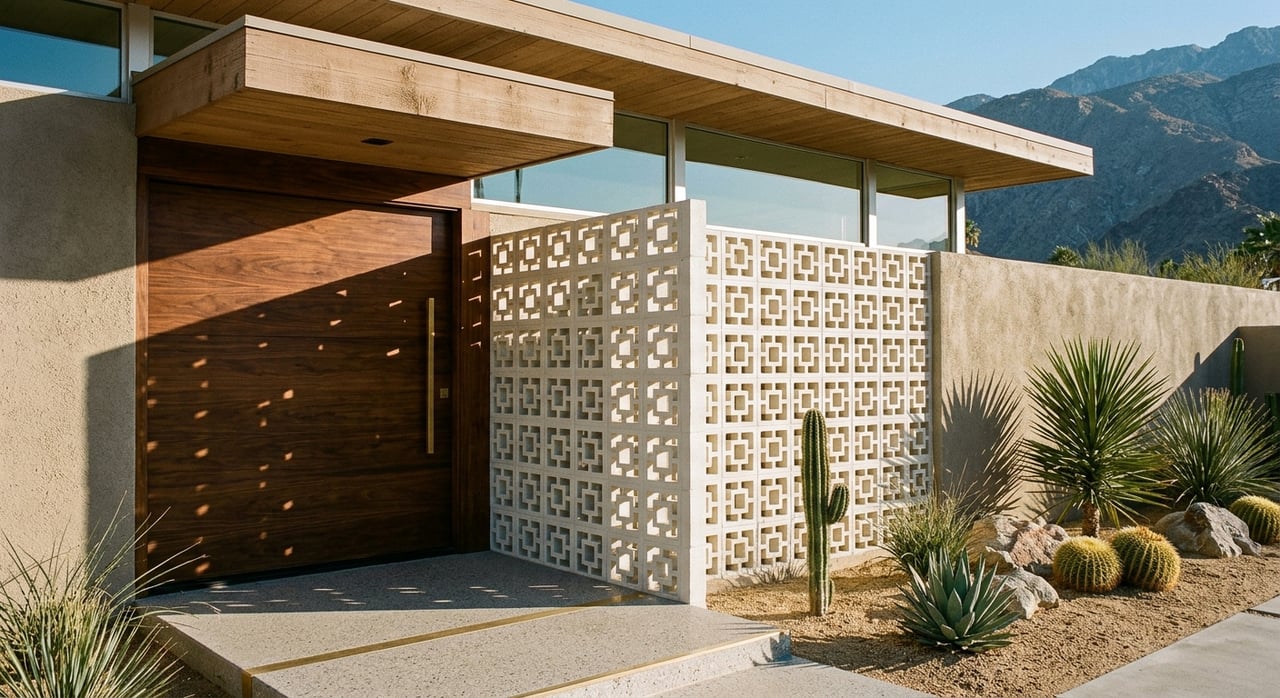
You can often spot these homes by their post-and-beam construction, large glass walls, clerestory windows, flat or butterfly roofs, breeze blocks, and attached carports. In Palm Springs, those features are not just decorative. They reflect a design approach built for desert conditions and a relaxed, open way of living.
Start with the home’s overall feel
Before you focus on finishes, step back and ask whether the house reads as mid-century at a glance. A strong example usually has horizontal lines, simple massing, and a clear visual connection between the structure and the lot.
Thoughtful updates can absolutely work in these homes. The key is whether the roofline, window rhythm, and indoor-outdoor proportions still feel intact after any remodeling.
Look for recognizable architecture
Palm Springs mid-century homes often include a few defining features that are worth preserving:
- Flat or low-pitched roofs
- Wide overhangs or folded roof forms
- Post-and-beam expression
- Clerestory windows
- Flush metal-frame windows
- Sliding glass doors
- Concrete, wood, or metal screens
- Breeze blocks
- Attached carports
Not every home will have every feature. Still, the more those elements remain visible and balanced, the more likely the house has retained its architectural character.
Evaluate the floor plan and flow
A Palm Springs mid-century home should feel easy to move through. Public rooms should connect naturally to private spaces, and indoor areas should transition smoothly to patios, courtyards, or pool areas.
That flow matters even more in Palm Springs because outdoor living is part of daily life for many homeowners. If the layout feels chopped up or disconnected from the yard, the home may have lost one of the qualities that makes this style so appealing.
Ask how the interior connects outside
When you tour a home, pay attention to how often your eye is drawn outdoors. Large panes of glass, sliding doors, and open sightlines were part of the original design language for a reason.
A usable connection to the patio or pool should feel natural, not forced. If outdoor areas seem like an afterthought, the house may be less functional for the lifestyle many buyers want in Palm Springs.
Prioritize shade, orientation, and comfort
Palm Springs weather is a major part of the buying decision. NOAA normals for Palm Springs Regional Airport show average highs of 103.6°F in June, 108.6°F in July, and 108.1°F in August, with about 114.8 days each year reaching at least 100°F.
In that climate, comfort is not a small detail. Shade, glare control, cooling performance, and relief from strong west or south sun exposure can have a big effect on how much you enjoy the home.
Check outdoor livability
The city’s community-design policies emphasize site orientation, shade structures, view corridors, and desert-appropriate materials. That means a beautiful home should also be practical in the heat.
As you evaluate a property, consider questions like these:
- Does the patio offer meaningful shade?
- Is the pool area comfortable during the hotter parts of the day?
- Do overhangs and window placement help reduce glare?
- Does the yard still frame mountain views without sacrificing privacy?
These details can shape your day-to-day experience just as much as the architecture itself.
Pay attention to neighborhood context
In Palm Springs, the neighborhood often matters almost as much as the house. The city officially recognizes neighborhoods including Twin Palms, Vista Las Palmas, Racquet Club Estates, Deepwell Estates, Indian Canyons, Tahquitz River Estates, and Movie Colony East.
Some neighborhoods are especially tied to mid-century identity. City tour materials specifically highlight Twin Palms and Racquet Club Estates, which helps explain why buyers often look at location as part of a home’s authenticity and long-term preservation context.
Why neighborhood identity matters
If you buy in a neighborhood known for mid-century homes, you may find a stronger sense of architectural consistency. You may also want to pay closer attention to what kinds of changes are typical and what preservation expectations may apply.
For example, in Twin Palms, the first Alexander Construction Company residential development in Palm Springs, recognizable design features help define the neighborhood as a whole. In areas like that, the setting can add meaning and value to the house itself.
Review updates with a careful eye
Most buyers want a home that is comfortable now, not a time capsule. Updated kitchens, baths, systems, and finishes can be a real advantage, especially if the work respects the home’s original design.
The best updates usually improve function without changing the home’s core proportions or character-defining features. If a remodel has removed the original roof expression, altered window patterns, or disrupted the indoor-outdoor relationship, the house may feel less like a classic Palm Springs mid-century home.
Ask smart questions about changes
When you review a property, try to understand what is original, what has been replaced, and what could be reversed. This can help you balance comfort, style, and long-term value.
Useful questions include:
- Which features appear original to the house?
- Which materials or windows are later replacements?
- Do additions feel visually balanced with the original structure?
- Could certain changes be updated again without disrupting the design?
Confirm permits and historic status
In Palm Springs, due diligence goes beyond the look of the home. Permit history and preservation status can affect what has been done to the property and what you may be allowed to change later.
The city states that all new plan review and permit applications must comply with the 2025 California Building Standards Codes as of January 1, 2026. For historic properties, Class 1 and Class 2 sites and contributing sites in historic districts require city review through a Certificate of Appropriateness for demolition and for major or minor alterations.
Due diligence checklist for buyers
Before you move forward, it helps to ask for clear documentation and local guidance. A careful review now can save time and surprises later.
Use this checklist as a starting point:
- Ask for permit history
- Confirm whether exterior work was approved
- Find out if the property is designated historic, contributing, or located in a historic district
- Ask which original elements remain in place
- If the home is historic, ask which future exterior changes would require city review
- If there is a Mills Act contract, ask what obligations transfer with ownership
For qualifying historic properties, Palm Springs’ preservation program also supports Mills Act incentives. California’s Mills Act uses a minimum 10-year contract in exchange for preservation obligations and potential property-tax benefits.
Do not overlook the landscape
In a Palm Springs mid-century home, the yard is part of the architecture. The outdoor setting should support the home’s lines, views, and connection to the desert rather than compete with them.
This also matters from a practical standpoint. Coachella Valley Water District says nearly 70% of residential water use is outdoors, while the city’s design policies support drought-tolerant landscaping, permeable paving, natural drainage, and materials suited to the desert climate.
Look for a landscape that fits the home
A well-considered yard can reinforce both design and livability. Overbuilt hardscapes, lawn-heavy planting, or inefficient irrigation may feel out of step with the original desert setting.
As you walk the property, notice whether the landscaping feels integrated with the architecture. Ideally, it should support privacy, comfort, drainage, and views while respecting local water realities.
Build the right buying team
Buying a distinctive Palm Springs home often takes a more tailored approach than buying a standard tract property. Design, permits, preservation rules, and desert performance all deserve careful attention.
That is why it helps to work with professionals who understand the local market and the practical questions these homes raise. A well-guided purchase can help you protect both your lifestyle and the long-term character of the property.
Questions to bring to your team
Here are a few helpful questions to discuss as you evaluate a home:
- Inspector: How do the roof, windows, HVAC, and drainage appear to perform in desert conditions?
- Designer: How can comfort improve without changing the home’s proportions or defining features?
- Local agent: Is the property historic, and what approvals may apply before exterior changes?
If you are considering a Palm Springs mid-century home, a clear process matters. The right guidance can help you identify authentic design, understand local requirements, and choose a property that fits the way you want to live. When you are ready for thoughtful, local insight, connect with Nicole Cox for a personalized consultation.
FAQs
What defines a Palm Springs mid-century home?
- A Palm Springs mid-century home is typically rooted in Desert Modernism and often includes features like post-and-beam construction, large glass expanses, clerestory windows, flat or butterfly roofs, breeze blocks, and a strong indoor-outdoor connection.
What should buyers check first in a Palm Springs mid-century home?
- Start by looking at the overall architecture, floor plan flow, and whether original design elements like rooflines, window patterns, and indoor-outdoor proportions still feel intact.
Why does shade matter in a Palm Springs mid-century property?
- Palm Springs experiences long periods of extreme heat, so shade, orientation, glare control, and outdoor comfort can strongly affect how usable and enjoyable the home feels year-round.
How do I know if a Palm Springs mid-century home is historic?
- Ask whether the property is designated historic, is a contributing site, or sits within a historic district, since those factors may affect city review requirements for exterior changes.
What is the Mills Act for Palm Springs historic homes?
- The Mills Act is a California program that can offer potential property-tax benefits for qualifying historic properties in exchange for preservation obligations under a minimum 10-year contract.
Why is landscaping important for a Palm Springs mid-century home?
- Landscaping shapes the home’s views, privacy, drainage, and desert character, and it also matters because a large share of residential water use in the Coachella Valley happens outdoors.
